
Tasha's Blog
Get the latest on the real estate market
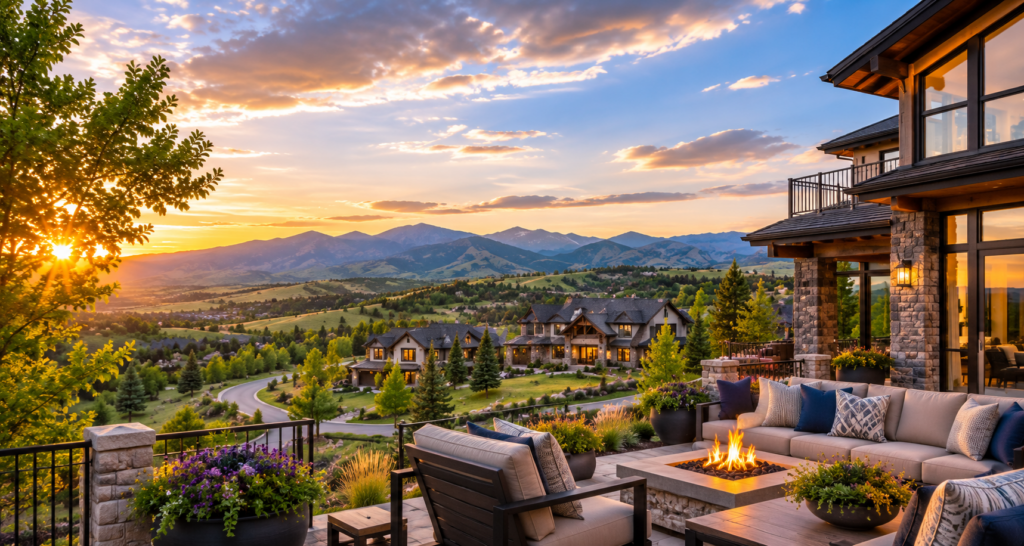
Most seasonal home tip articles read like they were written for anywhere in America. Inspect your HVAC. Power wash your driveway. Plant some flowers. If you own a home in Colorado, that advice is not wrong. It is just incomplete.
Colorado summers at elevation come with specific conditions that affect homes differently than almost anywhere else in the country. The UV intensity, the afternoon storm patterns, the wildfire season, the soil movement from freeze-thaw cycles. None of that shows up in the national checklist. Here is what actually matters this summer if you own a home anywhere in Colorado, from the Front Range communities of Castle Rock, Castle Pines, and Parker to the mountain towns and high desert regions across the state.
UV Damage at Elevation Is Faster and More Aggressive Than Most Homeowners Expect
Colorado sits at high altitude. Even along the Front Range, most of the state is above 5,000 feet, and communities like Castle Rock, Castle Pines, and The Village at Castle Pines push past 6,000. At that elevation, UV radiation is measurably more intense than what homeowners from lower elevations are used to. The result is that exterior paint, deck finishes, wood windows, composite decking, and even interior fabrics along south-facing windows break down significantly faster than manufacturer timelines suggest.
Summer is the right time to walk your home’s exterior with fresh eyes. If your deck finish is chalking, peeling, or graying, this is not cosmetic. Moisture will follow UV degradation into the wood. A deck restoration now costs a fraction of what a full replacement costs two seasons from now.
This applies whether you own a mountain cabin outside Breckenridge, a ranch home in Douglas County, or a newer build in Parker or Lone Tree. The higher your elevation, the faster the degradation. A UV-protective sealant reapplication on the right schedule is one of the highest-return maintenance investments a Colorado homeowner can make.
Afternoon Thunderstorms Are Not Subtle and They Are Coming
The Front Range storm pattern is predictable in structure and unpredictable in intensity. Colorado’s I-25 corridor, particularly communities like Castle Rock and the higher terrain around Castle Pines, gets some of the most active afternoon convective storm activity in the state. Mountain communities deal with it daily through summer. Even drier regions in eastern Colorado get intense storm bursts that arrive fast.
Before storm season peaks, walk your property with drainage in mind. Where does water move when two inches fall in forty minutes? Finished basements, elaborate hardscaping, and steep lot grades all create vulnerability. Window wells, French drains, and downspout extensions that redirect water away from foundation walls are not glamorous upgrades, but they protect the most expensive parts of your home.
Gutters matter more in Colorado than homeowners often realize. Pine needles, cottonwood fluff, and debris from the trees that define Colorado neighborhoods fill gutters quickly. A midsummer cleaning, not just a spring one, is worth adding to the calendar statewide.
Wildfire Defensible Space Is Part of What It Means to Own Property in Colorado
This is the home tip most Colorado homeowners know about in theory but have not fully acted on. Wildfire risk touches communities across the state, from the foothills towns along the Front Range to mountain communities and the western slope. Castle Rock, Castle Pines, and the forested corridors of Douglas County carry real exposure. So do countless other Colorado communities.
Summer is the right time to assess the 30-foot and 100-foot zones around your home. Ladder fuels, meaning low branches and dense scrub that allow a ground fire to climb into the tree canopy, are the specific thing to address. Many Colorado counties and municipalities offer free defensible space assessments through their fire departments. Douglas County, Jefferson County, and El Paso County all have active programs.
Homeowners who have invested in fire-resistant roofing, ember-resistant vents, and cleared defensible zones are protecting meaningful equity. Those who have not are carrying a risk that is increasingly visible to buyers and insurers alike. This is not an abstract concern. It is a standard part of Colorado homeownership.
The Soil Under Your Foundation Has Been Moving All Year
Colorado’s expansive clay soils are well known to contractors and mostly unknown to homeowners until something goes wrong. The freeze-thaw cycle through winter and the moisture swings of a Colorado summer, dry then wet then dry again, cause soil to expand and contract in ways that stress foundations, flatwork, and retaining walls over time. This is a statewide issue, particularly pronounced along the Front Range from Fort Collins down through Douglas County and into Colorado Springs.
Summer is the right season to look at your driveway, patio, and walkways for new cracking or lifting. Minor cracks addressed with proper sealant now do not become major structural issues later. For homes with elaborate hardscaping, outdoor kitchens, or tiered retaining walls, a masonry professional checking mortar joints and structural integrity before the next freeze cycle is a reasonable annual investment.
Inside the home, watch for doors that have started sticking, new gaps at window frames, or tile cracking along grout lines in areas that were previously fine. These are early signals worth tracking. Not every movement is serious. But knowing when something changed gives you and your contractor a useful baseline.
Xeriscaping Done Well Is a Smart Colorado Upgrade, Not a Compromise
The water conversation in Colorado has changed statewide. Drought cycles, water restrictions, and rising irrigation costs have made homeowners across the Front Range, the Western Slope, and everywhere in between rethink how they approach their yards. A thoughtful, native-plant landscape is not a signal of budget constraint. It is a signal of understanding the environment you actually live in.
If you have a traditional bluegrass lawn requiring heavy irrigation through the summer heat, this is the season to start thinking about a transition plan. A well-designed xeriscape with ornamental grasses, Colorado native perennials, blue grama, Buffalo grass, and structured rock or gravel elements can look every bit as polished as a traditional lawn. It also costs significantly less to maintain through an increasingly unpredictable water season.
This applies across Colorado climates. Whether you are in a Lone Tree subdivision, a Parker neighborhood, a mountain community, or an arid region on the Western Slope, planting intentionally for your specific altitude and moisture profile is practical, not aesthetic compromise. Colorado State University Extension has free resources for every region of the state to help homeowners make this transition well.
HVAC in Colorado Has a Variable You Should Know About
Yes, you should service your HVAC before summer peaks. But there is a specific Colorado variable worth knowing: the dramatic daily temperature swings at Colorado elevations mean your system switches between heating and cooling more frequently than in a stable climate. A July morning in Castle Rock or Colorado Springs can be in the low 50s and climb into the low 90s by afternoon. Systems here accumulate wear faster in that transition range than in states with more consistent summer temperatures.
Have a qualified local HVAC technician service your system before peak summer. National chains often send technicians unfamiliar with the calibration demands of Colorado’s altitude and swing temperatures. A well-tuned variable-speed system at altitude performs very differently from the same system at sea level.
Homes with large square footage and high ceilings, common in Douglas County luxury communities and mountain properties alike, also benefit from a ceiling fan direction check at the start of summer. Counterclockwise rotation pulls hot air up in summer. It is a small thing that makes a real difference in a two-story great room or a great room with vaulted ceilings.
Roof and Hail Damage: Colorado’s Most Underreported Home Issue
Colorado is one of the top hail damage states in the country, and the Front Range sits in a particularly active corridor. Castle Rock, Parker, Lone Tree, and the broader Douglas County area see significant hail events most summers. So do Denver’s northern suburbs, Colorado Springs, and communities along the foothills.
After any significant hailstorm, get on your roof or have a trusted contractor do it. The damage that matters most is often not the dramatic dents visible from the street. It is the granule loss and micro-fracturing on asphalt shingles that compromises waterproofing without looking severe to an untrained eye. Left unchecked, that damage becomes a leak, and a leak in a Colorado home that sees snow loading the following winter becomes a much larger problem.
Most Colorado homeowners’ insurance policies cover hail damage, but claims need to be filed within a reasonable window after the event. Documenting damage promptly protects you. Many roofing contractors in Colorado offer free post-storm inspections. It is worth calling one after a serious storm even if you see nothing obvious from the ground.
What Summer Maintenance Signals About How You Own Your Home
A well-maintained home in Colorado tells a story. Buyers and neighbors notice. So do insurers, appraisers, and the long-term value trajectory of the property itself. Whether you own in Castle Pines or Cortez, Lone Tree or Leadville, the homeowners who treat summer maintenance as a consistent investment rather than a reactive expense are the ones whose properties hold their value through any market condition.
Colorado is a state that rewards people who take its conditions seriously. The altitude, the storms, the soil, the wildfire risk, the UV. These are not reasons to worry. They are reasons to stay ahead of a maintenance calendar that is specific to where you actually live.
That is what good Colorado homeownership looks like.